 Business License
Stacked Chicken Manure Air Dryer,Stacked Chicken Manure Air Drying Equipment
Stacked Chicken Manure Air Dryer,Stacked Chicken Manure Air Drying Equipment
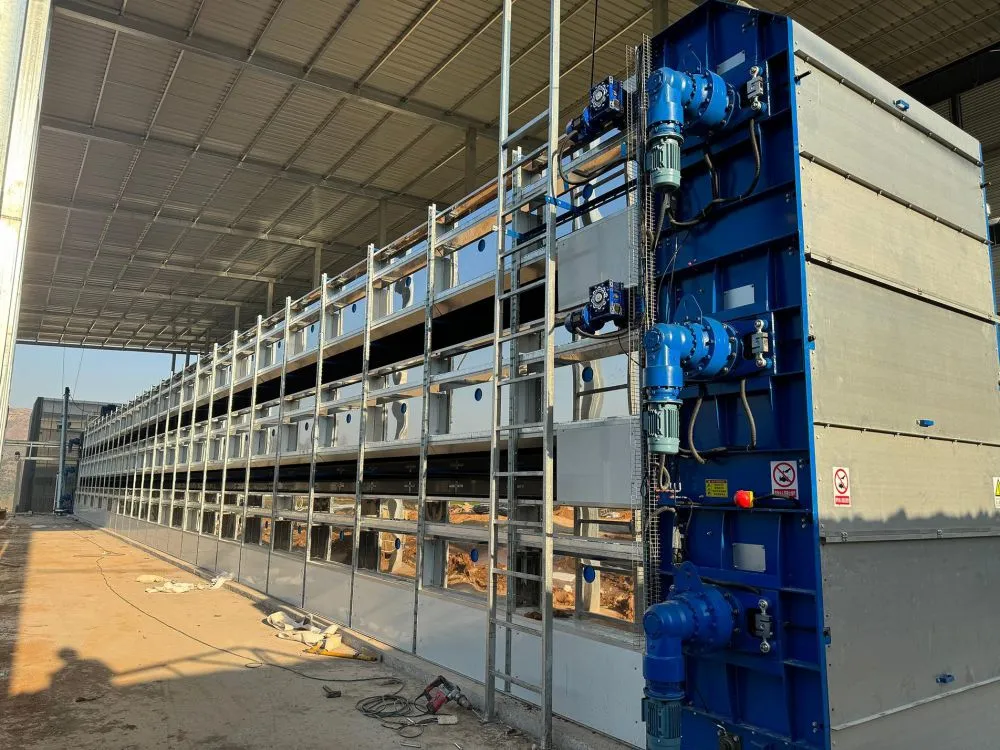
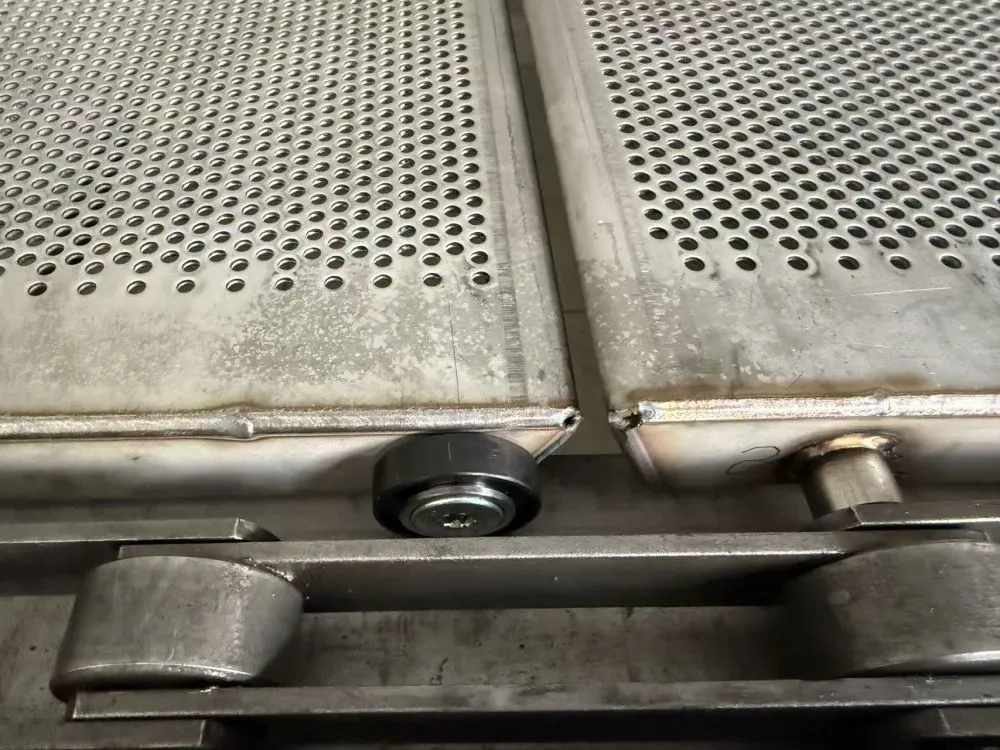
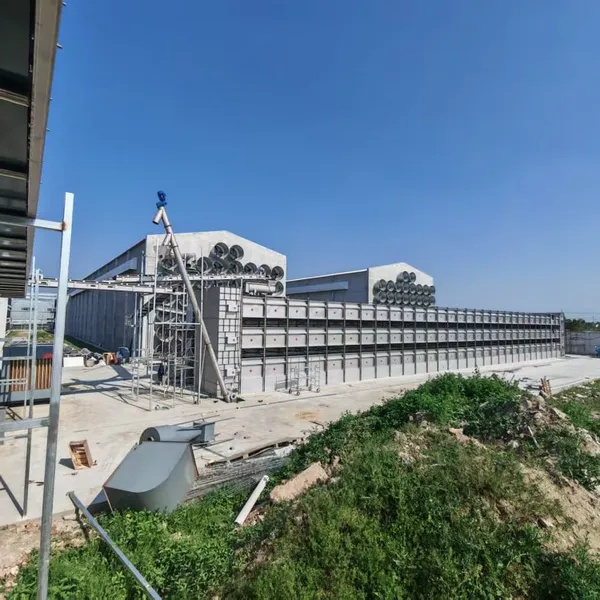
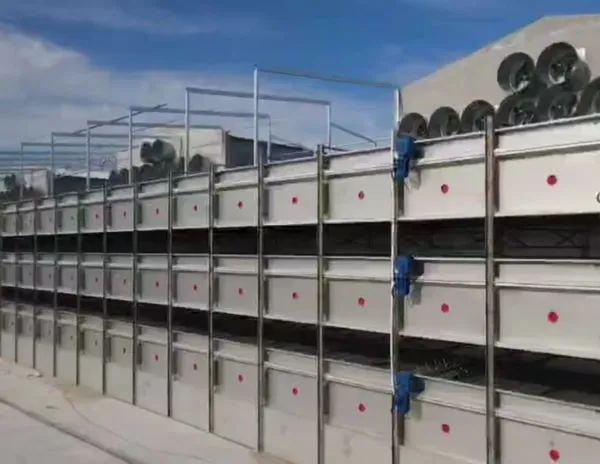
The chicken manure air drying equipment is a customized low-temperature negative-pressure heat-free manure treatment device specially designed for large-scale layer and broiler farms. Different from traditional rotary high-temperature dryers and simple solid-liquid separators, this equipment adopts a multi-layer sealed mesh belt negative-pressure cross-flow air drying process, utilizing waste residual heat from chicken house ventilation and natural fresh air. It requires no additional heat sources including coal, natural gas or electric auxiliary heating, and realizes continuous dehydration and deodorization of fresh chicken manure on-site.
Raw material initial state: Fresh chicken manure with a moisture content of 75%-80%, featuring high viscosity, strong odor, poor storage and transportation performance, and failure to meet environmental protection standards.
Finished product state after drying: Dried chicken manure with a moisture content of 20%-30%, loose texture without viscosity and greatly reduced odor. It can be directly used as organic fertilizer raw material, farmland base fertilizer and pond aquaculture fertilizer. The equipment supports on-site resource utilization of farm manure and meets the environmental protection requirements of planting-breeding combination and zero discharge.
2. Core Working Principle
This equipment applies the sealed negative-pressure counter-current air drying principle with an internal drying temperature controlled at 35-55℃ throughout the low-temperature drying process. Waste hot air exhausted from chicken houses serves as the drying medium, and multiple groups of frequency conversion induced draft fans form a negative-pressure air duct. Hot air penetrates the manure materials on each layer from top to bottom to take away free moisture inside chicken manure. Equipped with an intelligent fresh air adjustment system, the machine can automatically switch among three air modes including upward air, downward air and circulating dehumidification air according to ambient temperature and humidity, adapting to all weather conditions and preventing efficiency reduction in low-temperature and rainy days.
Operating under fully sealed negative pressure, the equipment prevents odor and dust leakage, and avoids external rainwater and moisture entering the drying chamber. Its dehydration stability is far superior to open-air sun drying.
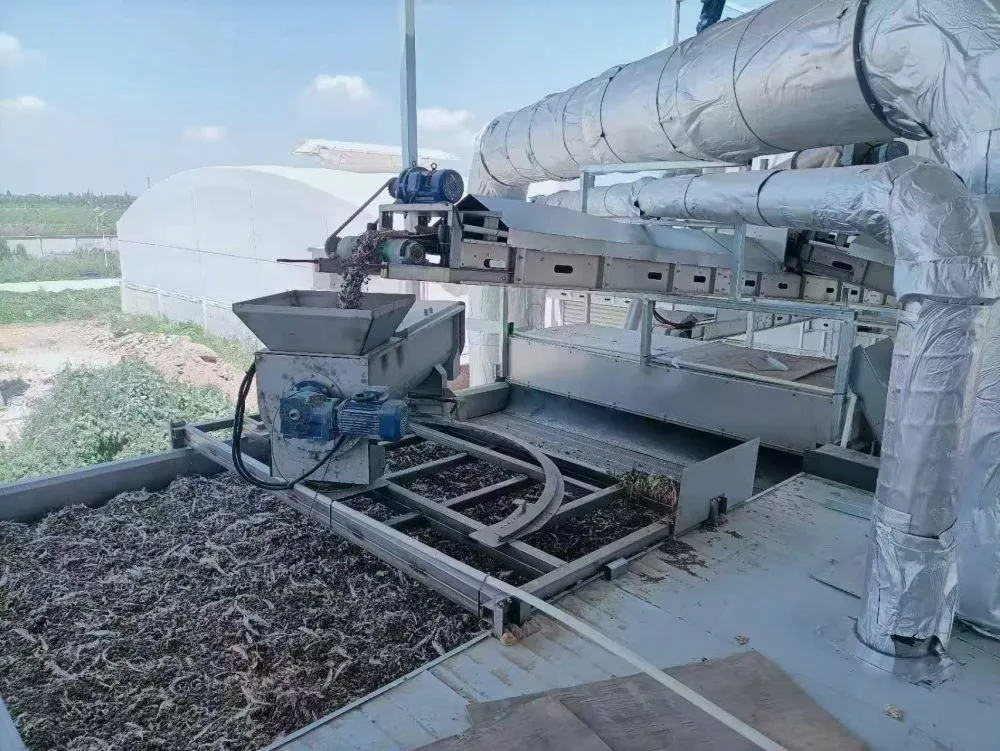
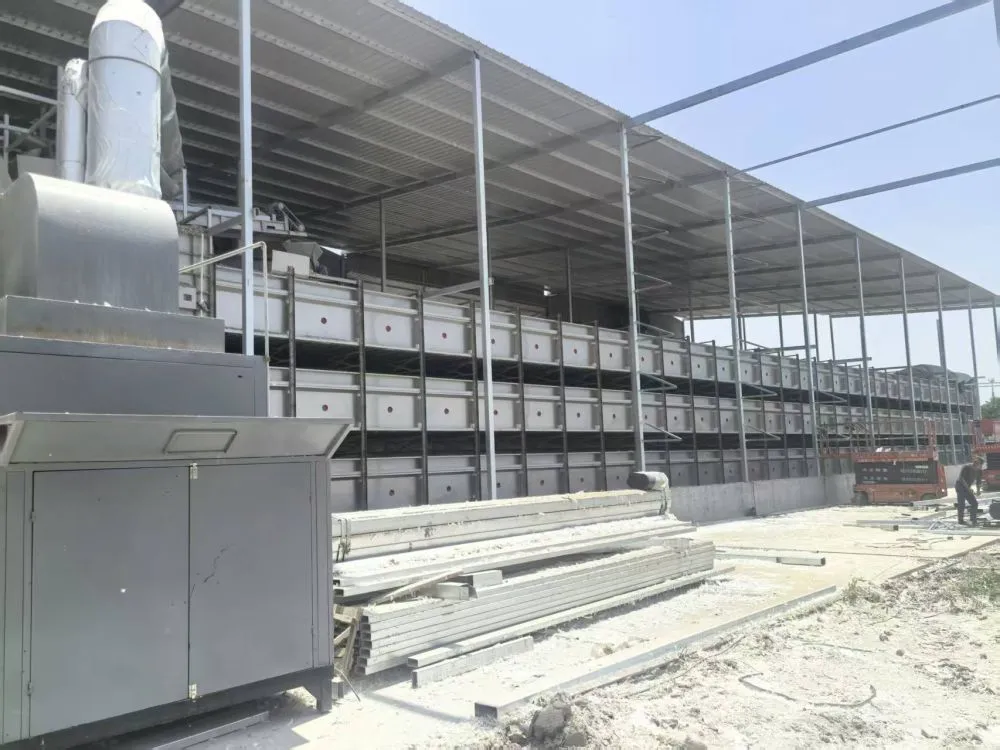
3. Complete Technological Process (6 Working Procedures, Full-automatic Unmanned Operation)
Procedure 1: Automatic Feeding and Material Homogenizing
Fresh wet chicken manure collected by chicken house manure scrapers is delivered to the top feeding port of the drying equipment through a sealed screw conveyor. A material stirring and homogenizing device evenly spreads viscous chicken manure on the first layer of mesh belt with consistent material thickness, eliminating local material accumulation and uneven drying. The whole feeding process is sealed with no odor diffusion.
Procedure 2: Reciprocating Conveying via Multi-layer Mesh Belt
The equipment is equipped with 3-7 layers of stainless steel mesh belts for layered material conveying. Chicken manure falls and turns over layer by layer from top to bottom. Each falling process breaks up caked manure and destroys hardened material layers, enabling hot air to penetrate the inside of materials. Compared with single-layer drying equipment, the dehydration efficiency is improved by more than 40%.
Procedure 3: Negative-pressure Low-temperature Cross-flow Dehydration (Core Procedure)
Under the action of negative-pressure fans, residual hot air from chicken houses vertically penetrates manure material layers to continuously remove internal moisture. The intelligent control system monitors real-time temperature and humidity inside the chamber, and automatically adjusts fan speed and air damper opening. Upward air mode is adopted for rapid moisture removal in hot weather, while internal circulating dehumidification mode is activated in cold and rainy days to ensure stable dehydration effect independent of external weather conditions.
Procedure 4: Centralized Treatment of Exhaust Gas and Dust
Moisture, fine dust and ammonia gas generated during drying are collected into the tail gas treatment system uniformly. After spray deodorization and dust removal purification, exhaust gas is discharged up to standard, with an ammonia removal rate of no less than 70%. It completely solves the problem of odor nuisance from farm manure and meets all environmental assessment inspection requirements.
Procedure 5: Automatic Discharging of Finished Products
After 24 to 48 hours of continuous low-temperature drying, qualified dried chicken manure with standard moisture content is automatically discharged from the equipment bottom. The finished product presents loose granular state without adhesion and mildew, requiring no secondary sun drying.
Procedure 6: Finished Product Storage or Direct Transportation
Dried chicken manure can be delivered to sealed storage bins or directly loaded for sales. The equipment covers a small floor area with no need for large-scale sun drying sites.
4. Reference Core Equipment Parameters
Item | Parameter Index |
Inlet Moisture Content | 75%-80% |
Outlet Moisture Content | 20%-30% (adjustable on demand) |
Drying Cycle | 24-48h |
Heat Source Mode | No additional heat source, reuse of chicken house waste heat |
Power Consumption per Ton of Manure | ≤80 kWh/ton |
Odor Removal Rate | ≥70% |
Operation Mode | 24h full-automatic unmanned operation |
5. Core Selling Points (5 Dimensions for Sales Promotion and Bidding Documents)
1. Extreme Energy Saving: No Auxiliary Heat Source, Ultra-low Operating Cost (Core Selling Point)
• Driven completely by waste hot air from chicken house ventilation, no extra heat sources such as natural gas, coal, biomass fuel and electric heating are required, eliminating high fuel costs of traditional high-temperature dryers;
• Only fans and conveying motors consume electricity, with power cost controlled at USD10-12 per ton of chicken manure. The overall operating cost is reduced by more than 70% compared with rotary high-temperature dryers;
• The equipment recycles waste heat from chicken houses and optimizes indoor ventilation environment simultaneously, achieving dual benefits.
2. Low-temperature Drying Process: High Fertilizer Retention, No Loss of Nutritional Value
• Stable low-temperature drying at 35-55℃ throughout the process, different from high-temperature drying above 150℃. It completely retains nitrogen, phosphorus, potassium and organic matters in chicken manure without material burning and nitrogen volatilization caused by high temperature;
• Dried chicken manure with complete nutrients has higher market value than high-temperature dried manure products;
• No auxiliary materials like straw and sawdust are needed for moisture adjustment, supporting direct processing of pure chicken manure and cutting auxiliary material procurement costs.
3. Sealed Negative-pressure Environmental Protection: Eliminate Odor Nuisance and Pass Environmental Assessment Easily
• Full sealed structure and negative-pressure operation avoid odor and dust leakage fundamentally, solving farm odor problems at the source;
• Integrated spray deodorization system ensures exhaust gas meets discharge standards, with qualified removal efficiency of ammonia and hydrogen sulfide, complying with local environmental inspection regulations;
• Open-air sun drying is no longer required, free from occupation of large land and influence of rainy and snowy weather. No secondary pollution is generated, fully conforming to national livestock manure resource utilization policies.
4. Full-automatic Intelligent Operation: Labor-saving and 24-hour Unmanned Operation
• One-click start-stop design equipped with PLC intelligent electronic control system, supporting automatic temperature & humidity control, air volume adjustment and fault alarm;
• Full automatic operation covering feeding, drying, material turning and discharging. Only one worker is required for regular daily inspection without full-time on-duty personnel;
• Compatible with existing farm manure scraping systems to realize closed-loop assembly line operation including manure collection, drying and finished product discharging.

Contact Us
Recommended Products
-
 Chicken Manure Drying Equipment----Stacked Chicken Manure Air Drying EquipmentUS$ 90000MOQ: 1 Combo
 -
Chicken Manure Air-drying Equipment--Chicken Manure Drying EquipmentUS$ 120000MOQ: 1 Combo
-
Livestock and Poultry Manure Fermentation Equipment,Livestock Farm Waste Fermentation TankUS$ 100000 - 150000MOQ: 1 Combo
-
90% New Used Chicken Manure Fermentation Tank, Chicken Manure Organic Fertilizer Production EquipmentNegotiableMOQ: 1 Combo
-
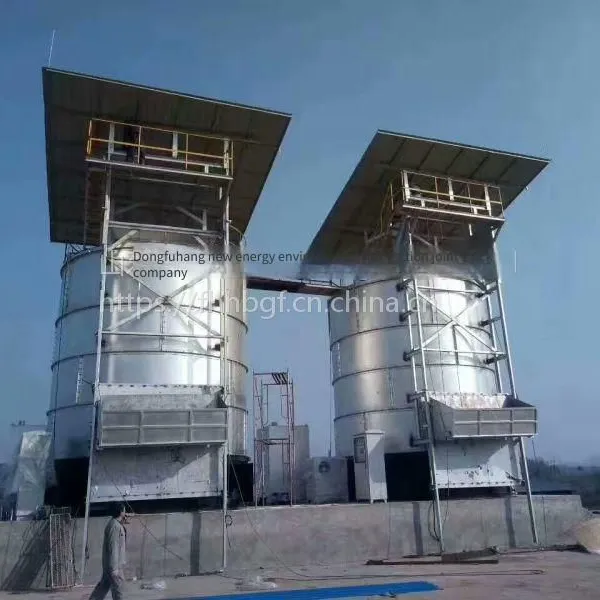
Tower-type Feces Fermentation Equipment: New Technology Leads the Direction of Feces TreatmentNegotiableMOQ: 0 Unit
-
Fuhang Solar Sludge Treatment Equipment, Model Fw30 Sludge Drying EquipmentNegotiableMOQ: 0 Unit
-
New Equipment for Municipal Sludge Treatment - Solar Sludge Drying EquipmentNegotiableMOQ: 0 Unit
-
Solar Sludge Drying Equipment - Model Fw20 Sludge Treatment EquipmentNegotiableMOQ: 0 Unit
-
Fuhang Livestock and Poultry Manure Fermentation Tower F116saNegotiableMOQ: 0 Unit
-
Livestock and Poultry Manure Fermenter - Tower-type Fermentation EquipmentNegotiableMOQ: 0 Unit
-
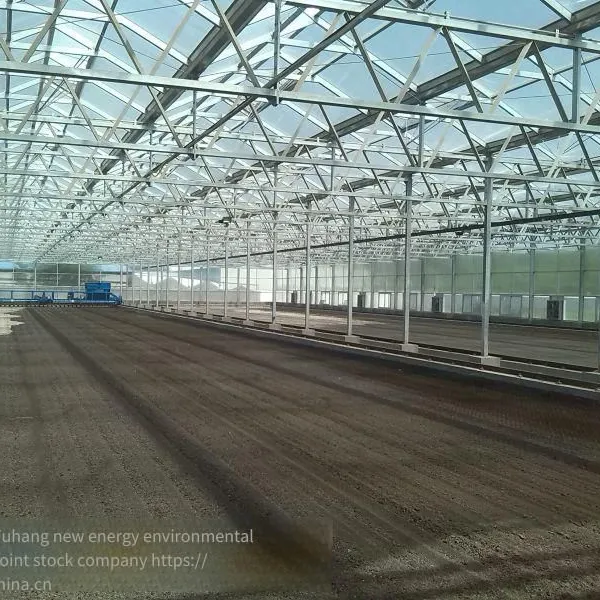
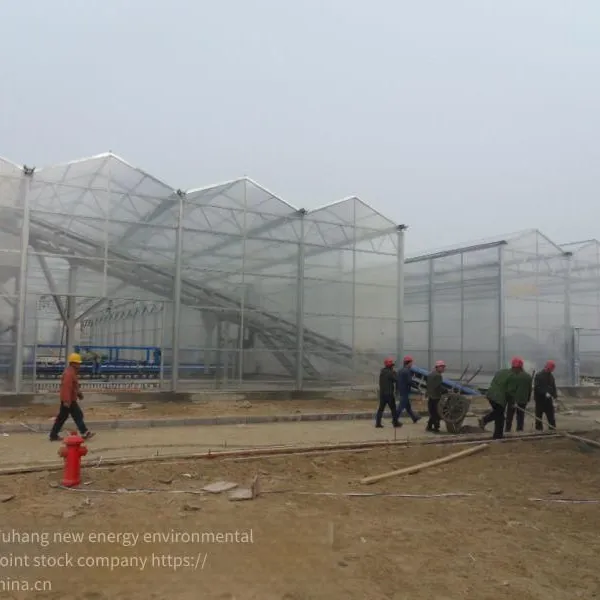
New Energy Sludge Treatment Equipment Creates a New Blueprint for Sludge DryingNegotiableMOQ: 0 Unit
-
Sludge Treatment Equipment - Fuhang Environmental Protection Solar Sludge Drying EquipmentNegotiableMOQ: 0 Unit
-
Sludge Treatment Equipment - Fuhang Brand Fw20 Drying-type Sludge Treatment EquipmentNegotiableMOQ: 0 Unit
-
Sludge Fermentation Equipment - Resource Utilization Through Fermentation for Fertilizer ProductionNegotiableMOQ: 0 Unit
-
Fecal Fermentation Equipment - Fuhang F90sa Cow Dung Treatment EquipmentNegotiableMOQ: 0 Unit
-
Fuhang Sludge Treatment Equipment - Model Fw20: Dry Sludge to 30% Moisture ContentNegotiableMOQ: 0 Unit
-
Cow Dung Fermentation Equipment F116sa Fertilizer Production EquipmentNegotiableMOQ: 0 Set
-
Solar Sludge Drying Equipment, Leading the Development of the Sludge Treatment Equipment IndustryNegotiableMOQ: 0 Unit
-
Cow Dung Fermentation Tank - Manufacturer From ShandongNegotiableMOQ: 0 Set
-
New Technology for Chicken Manure Treatment - Chicken Manure Fermentation Tank Model F90saNegotiableMOQ: 0 Set